
How Can World Mental Health Day Encourage Better Emotional Support for Older Adults?
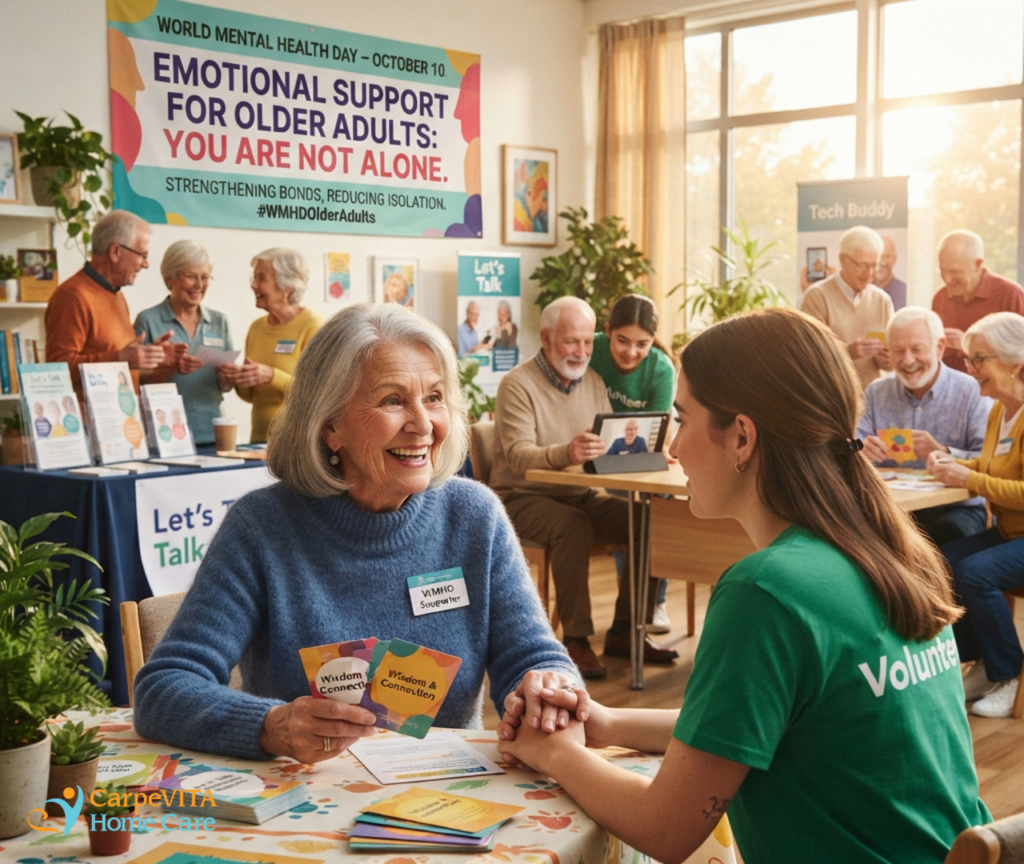
World Mental Health Day can encourage better emotional support for older adults by reminding families, caregivers, and communities to pay attention to emotional well-being as well as physical health. Observed each year on October 10, the day provides an opportunity to talk openly about mental health, recognize meaningful changes in mood or behavior, reduce isolation, and help older adults connect with appropriate support when needed.
What Is World Mental Health Day?
World Mental Health Day is observed every year on October 10. It promotes awareness of mental health and encourages people to recognize the importance of emotional well-being.
Mental health matters at every age. Older adults may experience major life changes that affect how they feel, including retirement, changes in physical abilities, loss of loved ones, moving to a new home, or becoming more dependent on others.
World Mental Health Day reminds us that emotional needs deserve attention and respect.
Why Is Emotional Support Important for Older Adults?
Emotional well-being can influence many parts of everyday life. An older adult who feels connected, respected, and supported may be more willing to participate in activities and communicate concerns.
Families and caregivers can provide support by making time for meaningful conversations and paying attention to changes.
Helpful approaches may include:
- Listening without immediately trying to solve every problem
- Including the older adult in family decisions
- Encouraging regular social contact
- Supporting favorite hobbies and interests
- Respecting personal choices whenever possible
- Helping maintain familiar routines
- Encouraging professional support when appropriate
Small actions can sometimes make an important difference in someone’s day.
How Can Families Recognize Emotional Changes?
Everyone has difficult days, so one change does not necessarily mean that a person has a mental health condition.
However, families should pay attention when changes are significant, unusual, or continue over time.
Possible changes might include:
- Losing interest in favorite activities
- Withdrawing from friends or family
- Major changes in sleeping habits
- Changes in appetite
- Increased irritability
- Frequent sadness or worry
- Difficulty concentrating
- Unusual changes in daily routines
- Expressing feelings of hopelessness
These signs can have many possible causes, including physical health conditions and medication effects. Families should avoid trying to diagnose the problem themselves.
A qualified healthcare professional can evaluate concerning changes and recommend appropriate next steps.
How Can Social Connection Support Emotional Well-Being?
Social connection can be an important part of healthy aging.
Older adults may become more isolated because they no longer drive, have difficulty walking, live far from relatives, or have experienced the loss of friends or a spouse.
Families can look for realistic ways to maintain connections.
Depending on the person’s interests and abilities, options might include:
- Regular family visits
- Phone or video calls
- Meals with friends
- Senior center programs
- Religious or community activities
- Clubs and hobby groups
- Appropriate volunteer activities
- Short outings
- Spending time outdoors
The goal is not to create a busy schedule. It is to provide opportunities for meaningful interaction that the older adult enjoys.
How Can Home Care Provide Emotional Support?
Non-medical home care can provide practical assistance while also offering regular human interaction.
Depending on the person’s needs and the services offered by the agency, a caregiver may provide companionship, help with meals, transportation, personal care, light housekeeping, or other everyday activities.
Companionship might include having conversations, playing games, looking through photographs, taking appropriate walks, or helping an older adult participate in favorite hobbies.
Caregivers can also notice changes in a client’s normal behavior and follow agency procedures for reporting concerns.
Home caregivers are not replacements for mental health professionals. When professional mental health care is needed, families should seek assistance from qualified providers.
Why Is October an Important Time to Check In?
World Mental Health Day occurs during fall in the United States. Seasonal changes can make October a useful time for families to check on an older adult’s emotional and social needs.
Days become shorter, temperatures begin to fall, and people may start spending more time indoors. Upcoming holidays may also bring both excitement and emotional challenges.
Some older adults may be looking forward to family gatherings. Others may experience loneliness or grief during the holiday season.
Families can plan ahead by discussing holiday activities, transportation, visits, and other opportunities for connection.
How Can Families Start Conversations About Mental Health?
Talking about emotional health does not need to feel formal or uncomfortable.
A family member might simply ask how the older adult has been feeling or whether anything has been worrying them recently.
Good conversations often begin with listening.
Avoid dismissing concerns with statements such as “Don’t worry about it” or assuming that sadness and isolation are simply normal parts of getting older.
Instead, take concerns seriously and encourage the person to speak with a healthcare professional when appropriate.
If an older adult talks about suicide, self-harm, or feeling that life is not worth living, seek immediate professional or emergency assistance.
How Can Caregivers Support Everyday Emotional Wellness?
Simple routines may help create a more supportive environment.
Caregivers and families can encourage activities the older adult enjoys, provide opportunities for conversation, and help the person remain involved in decisions about daily life.
It is also important to respect privacy and independence. Emotional support should not mean controlling every decision or forcing someone to participate in unwanted activities.
Ask what the person enjoys and what kind of support would be helpful.
How Can World Mental Health Day Make a Lasting Difference?
World Mental Health Day can serve as a reminder that supporting older adults involves more than addressing physical needs.
Families can continue checking in throughout the year, encouraging social connections, listening to concerns, and watching for meaningful changes in mood or behavior.
Home care agencies can also use the observance to educate caregivers about respectful communication, companionship, and procedures for reporting concerns.
Most importantly, older adults should have opportunities to be heard and included. By making emotional well-being part of everyday conversations about aging and care, families and caregivers can help create a more compassionate and supportive environment throughout the year.
Legal Disclaimer: This post is strictly for educational use and should not be construed as professional advice (medical, legal, financial, or otherwise).

